

SQ-001
Mission 001The Illusion Engine
Some moths have flat wings that look curved. Students race a computer vision model to find camouflaged moths, spin a 3D wing, then design an illusion that fools a depth estimator.
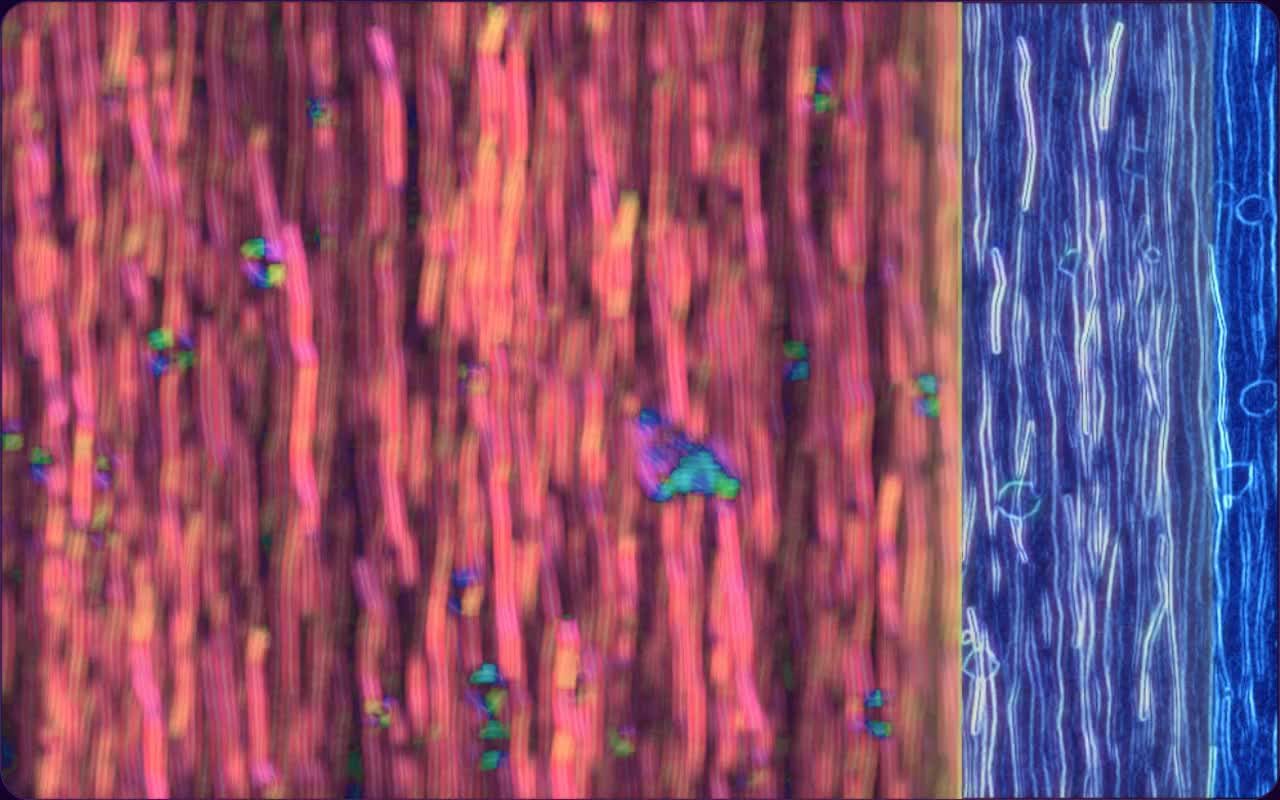
Collection drawer. Computer Vision track
The collection so far.
Every mission is pinned here once it's ready for classrooms. One is in. Two more are in preparation.

SQ-002
Teach the detector
In preparation
SQ-003
Vision in the field
In preparation
Try this with your eyes
Is this wing curved?
- It looks like a curled leaf. Light on one side, shadow on the other, a fold down the middle.
- Now turn it side on. If it were really curved, you'd see the bend.
- It's completely flat. The curve is painted on. That's the trick students take apart in Mission 001.
Inside the mission.
Discover
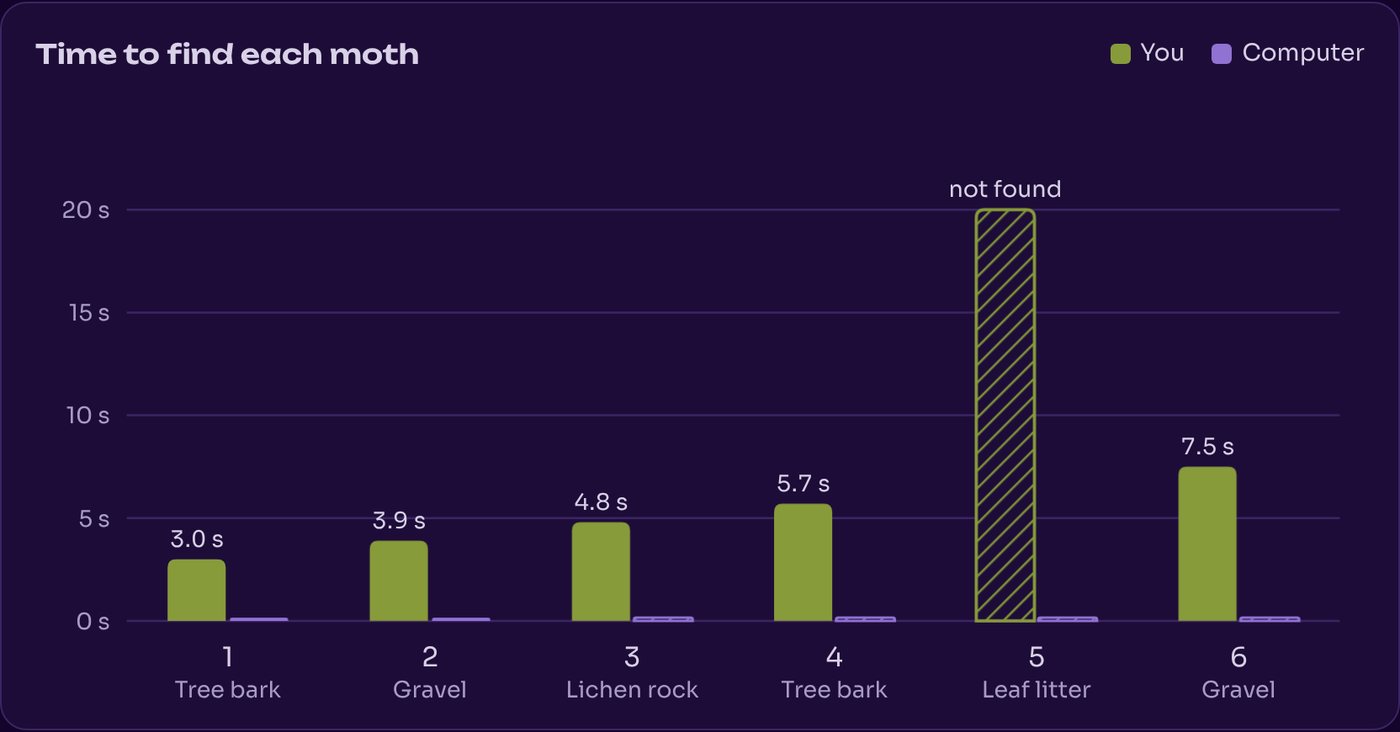
Hunt for hidden moths, race a detector and meet the scientists behind the research.
Experiment
Spin the wing in 3D and spot the light and shadow tricks that fake depth.
Create
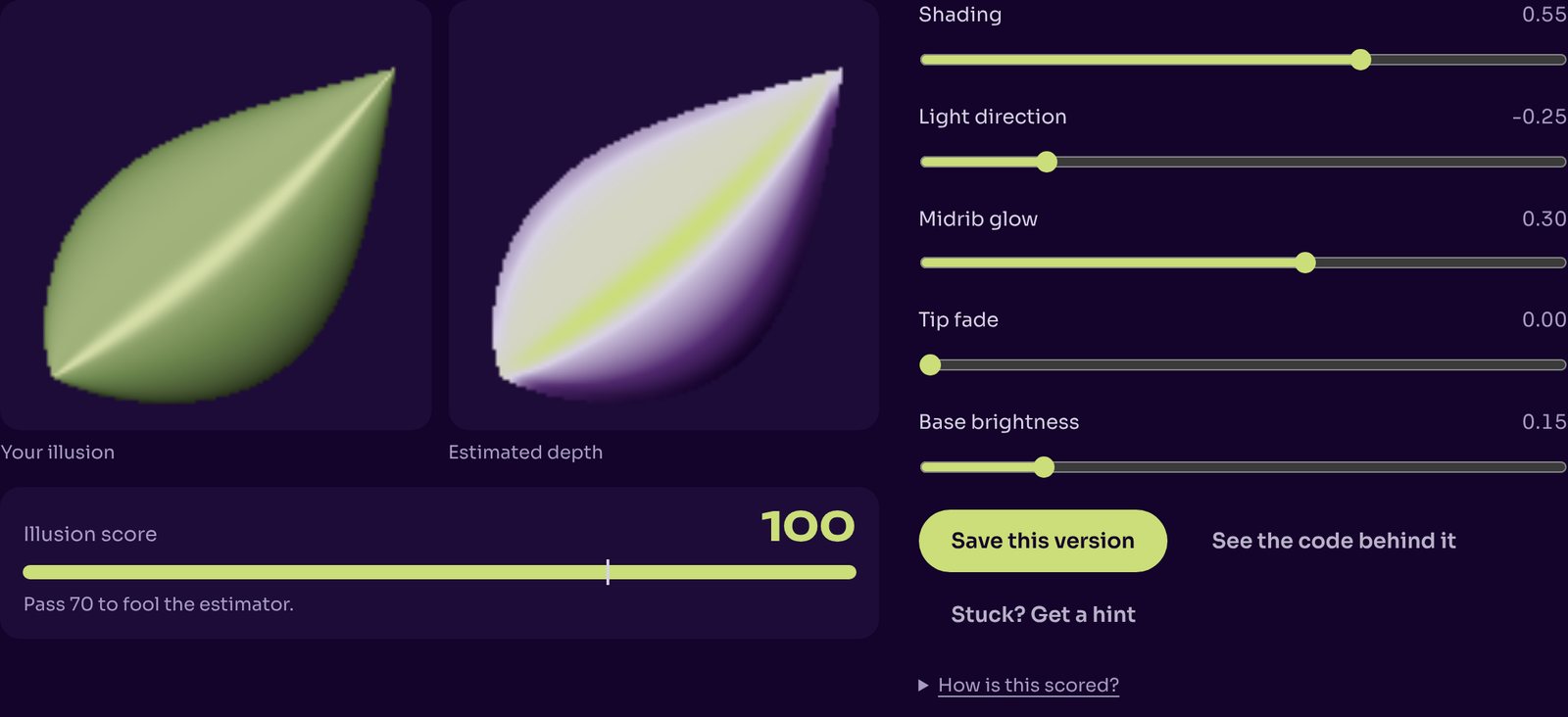
Design an illusion with sliders, or write the code for it in optional coding levels.
Keep
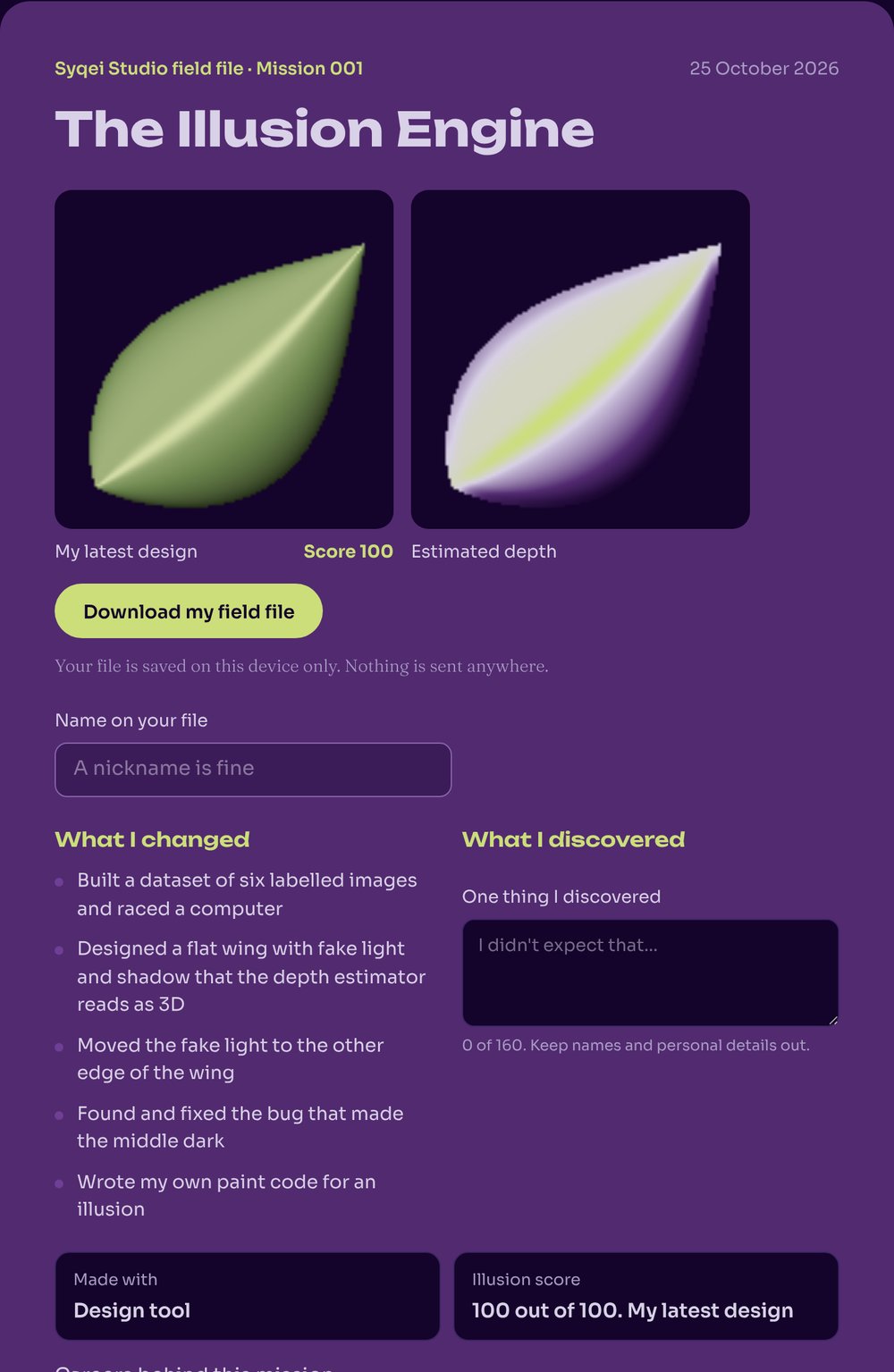
Download a field file with what they made, what they can now do and the careers behind it.
What students make.
Screens from the mission. Student work stays on their own device, so these are our examples.
Run Mission 001 with one or two classes.
Schools pay A$20 per student, per year, for every mission. That includes the teacher pack, onboarding and a feedback survey. Nothing to pay until your class has used it.